Personalized Medical Care & Dedicated International Patient Concierge

Men's Surgery · Needs Clinic Confirmation
Male Rhinoplasty
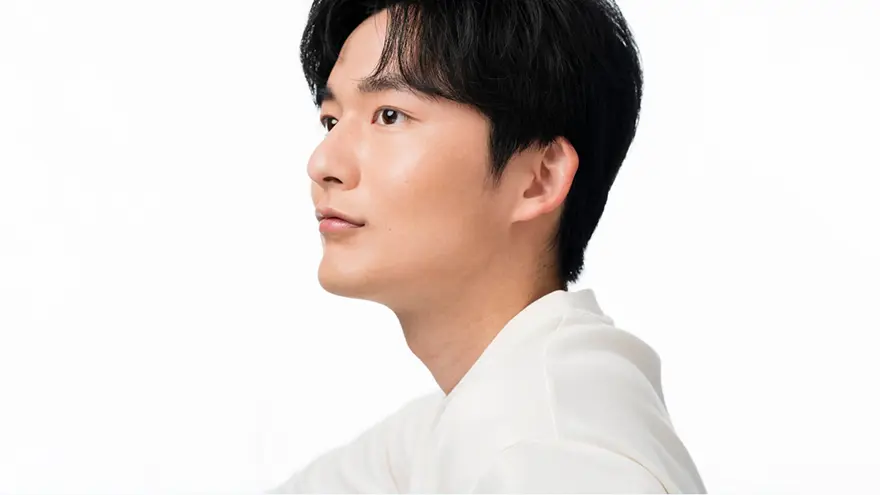
Male rhinoplasty is a cosmetic nose procedure designed to enhance masculine facial balance and create a stronger, more structured nasal profile.
Schedule a ConsultationMale Rhinoplasty
What Is Male Rhinoplasty? Overview at Deesse
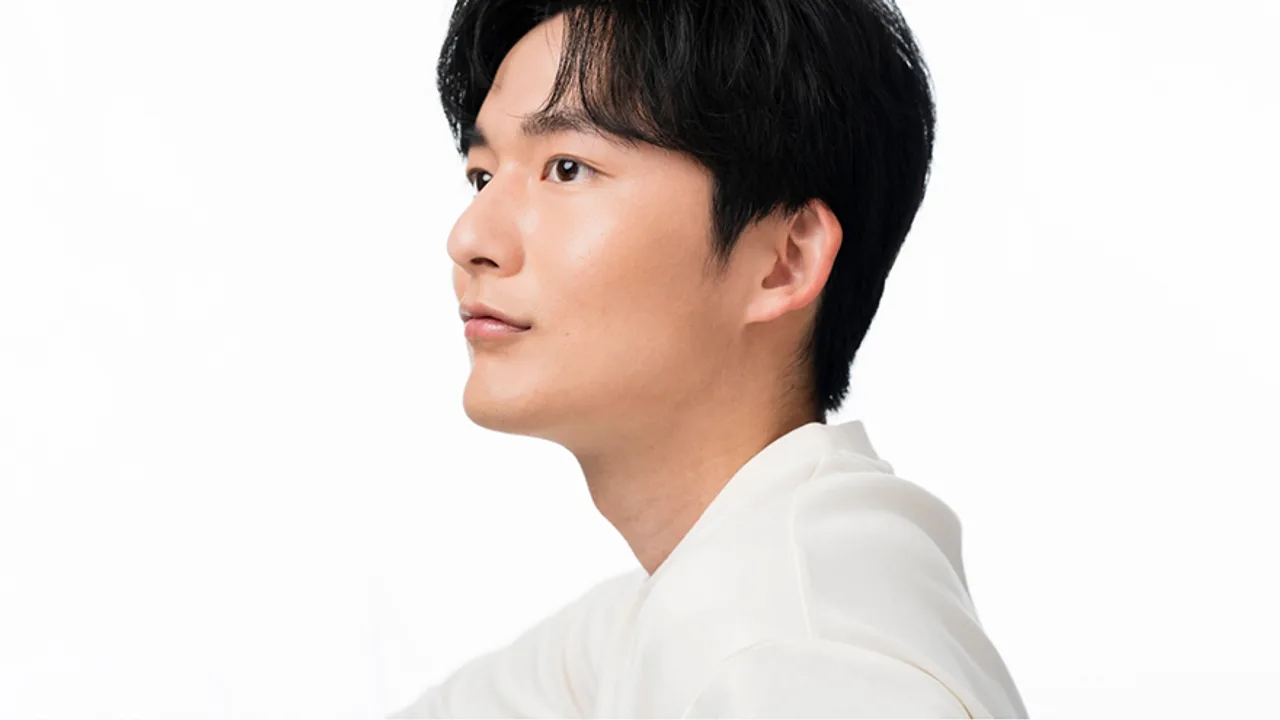
Male rhinoplasty is a cosmetic nose procedure designed to enhance masculine facial balance and create a stronger, more structured nasal profile. The nose influences every aspect of the facial impression — from the front view where it defines the central axis of the face, to the side profile where it determines the strength and definition of the facial silhouette. For men, the most impactful nasal improvements are those that create a straighter, firmer, more defined appearance — not a delicate or sharply refined result, which is more appropriate for female-oriented rhinoplasty.
At Deesse Plastic Surgery, male rhinoplasty is distinguished by its masculine-design-first philosophy. Every surgical plan begins with an analysis of the individual patient's facial proportions — the relationship between the forehead, nose, lips, and overall side profile — to establish the nasal design most harmonious with the patient's specific masculine features. The goal is not to create the most prominent or elevated nose possible, but to create the nasal profile that best suits each individual's face — strong, structured, and naturally proportionate.
Five correction types are available — low nose bridge correction, crooked nose correction, hump nose correction, arrow-shaped or drooping tip correction, and wide nostril or bulbous nose correction — each addressing a specific nasal concern through a precisely designed surgical approach. Implant materials or autologous cartilage are selected depending on the patient's individual anatomy and needs. Surgery takes approximately two hours under sedation anesthesia, with same-day discharge and approximately five to seven days of initial recovery.
At a Glance:
- Correction Types: 5 — bridge, crooked, hump, tip, nostril
- Materials: Implant or autologous cartilage per individual anatomy
- Design: Masculine-profile-first — straight, strong, structured
- Duration: Approximately 2 hours
- Anesthesia: Sedation anesthesia
- Discharge: Same day possible
- Recovery: Approximately 5–7 days initial
Who Is Male Rhinoplasty Right For?
Male rhinoplasty is appropriate for men whose nasal structure affects their facial balance, profile definition, or overall masculine impression — and who want a precisely designed corrective approach that maintains and enhances natural masculine character. Candidacy is confirmed through detailed consultation and facial proportion assessment with Dr. Kim.
Ideal Candidates Include:
- Low or Flat Nasal Bridge — Men in their 20s–40s whose nasal bridge is low or flat — creating a facial profile without definition or depth — where bridge augmentation creates a stronger, more structured side profile that significantly improves overall facial balance.
- Nose Lacking Definition or Structure — Those whose nose appears undefined, soft, or lacking in structural presence — creating a less impactful facial impression — where precisely designed augmentation creates the structural definition the face needs.
- Crooked or Asymmetrical Nose — Men whose nose deviates from the center axis — whether from prior trauma, congenital asymmetry, or other causes — where structural correction creates a straighter, more balanced nose line and may also improve breathing function.
- Hump Nose — Those with a prominent dorsal hump on the nasal bridge — creating an uneven profile that draws attention as an irregular feature rather than a defining masculine characteristic — where hump reduction smooths the profile into a more balanced masculine contour.
- Drooping or Arrow-Shaped Nasal Tip — Patients whose nasal tip points downward — creating a profile that appears drooping, heavy, or tired — where tip correction creates a cleaner, more refreshed side profile with improved facial balance.
- Wide Nostrils or Bulbous Nasal Tip — Those whose nostrils appear wide or whose nasal tip lacks definition — where refinement creates a more proportionate nose that improves overall facial balance while maintaining masculine nasal width.
- Wanting Improved Facial Balance and Profile Definition — Men for whom a more defined, structured nasal profile would significantly enhance the overall balance and masculine impression of their face — producing a stronger, more confident overall appearance.
Meet the Specialist: Dr. Jin Hyung Kim — Male Rhinoplasty & Craniofacial Expert

Chief Director | Board-Certified Plastic Surgeon | Deesse Plastic Surgery
Dr. Jin Hyung Kim is the Chief Director of Deesse Plastic Surgery and a board-certified plastic surgeon with specialized expertise in aesthetic and craniofacial surgery. Trained at Yonsei University College of Medicine and Severance Hospital, Dr. Kim brings the surgical precision, facial anatomy understanding, and masculine aesthetic judgment that male rhinoplasty demands.
Male rhinoplasty requires a fundamentally different aesthetic framework from female rhinoplasty. The ideal nasal profile for a male face is not the same as the ideal profile for a female face — the bridge height, the tip projection, the nose-to-lip angle, and the overall structural presence of the nose must all be calibrated specifically for masculine facial proportions. A surgeon who applies female-oriented rhinoplasty principles to male patients produces a result that looks inconsistent with the patient's masculine character — too refined, too narrow, or too projected for the surrounding facial structure.
At Deesse, Dr. Kim's masculine-design-first approach ensures that every nasal correction plan is built around the specific principles of masculine facial harmony — a straight bridge from forehead to tip, strong but natural side-profile definition, a balanced nose-to-lip angle, and a structured nasal tip projection that is firm without being excessive. His craniofacial surgery specialization provides the three-dimensional anatomical understanding of how the nose integrates with the surrounding bone structure — ensuring every correction is designed in full context of the patient's facial architecture.
Credentials:
- M.D. & Master's Degree — Yonsei University College of Medicine
- Board-Certified Plastic & Reconstructive Surgeon
- Specialist Training — Severance Hospital, Sinchon
- Former Full-Time & Adjunct Professor, Dept. of Plastic Surgery — Severance Hospital
- Former Chief Director — Dau Plastic Surgery
- Current Chief Director — Deesse Plastic Surgery
Professional Memberships: Korean Society of Plastic and Reconstructive Surgeons | Korean Society for Aesthetic Plastic Surgery | Korean Society of Craniofacial Surgery | Japan Society of Aesthetic Plastic Surgery | Oriental Society of Aesthetic Plastic Surgery | International Society of Plastic Surgery
Male Rhinoplasty: Five Correction Types and Masculine Design Principles
Masculine Nose Design Principles
Male rhinoplasty at Deesse is guided by five design principles that distinguish masculine from feminine nasal aesthetics — and that ensure every correction produces a result that looks genuinely appropriate for a male face:
- A straight nose bridge from the forehead to the tip — creating structural presence and profile definition
- Strong but natural side-profile definition — firm without looking artificial or over-projected
- Balanced nose-to-lip angle — appropriate for masculine facial proportions
- Facial harmony with masculine bone structure — the nose must suit the surrounding architecture
- Structured nasal tip projection without excessive refinement — a defined tip that suits the overall face
Compared to female rhinoplasty, male rhinoplasty at Deesse preserves a slightly stronger and wider nasal contour — maintaining the masculine characteristics that make the result look appropriate and natural to each patient's face.
Type 01 — Low Nose Bridge Correction
For patients with a flat or low nasal bridge that lacks structural presence — creating a profile without depth or definition. Bridge augmentation using the most appropriate material — implant or autologous cartilage — increases nasal height naturally, improves side profile definition, and creates a more balanced and structured facial contour. The augmentation is designed to suit the individual's skin thickness and facial proportions — producing a naturally stronger bridge rather than an obviously elevated one.
Type 02 — Crooked Nose Correction
For patients whose nose deviates from the central facial axis — creating visible asymmetry from the front and an uneven profile from the side. Structural correction addresses the underlying cause of the deviation — whether bony, cartilaginous, or both — to produce a straighter, more balanced nose line. In cases where the deviation also contributes to breathing difficulty, the functional concern may be improved concurrently with the aesthetic correction.
Type 03 — Hump Nose Correction
For patients with a prominent dorsal hump on the nasal bridge — creating an irregular profile silhouette that disrupts the overall balance of the side view. Hump reduction smooths the nasal bridge contour — removing the prominence while maintaining the masculine structural presence of the bridge and preserving the natural strength of the nasal profile.
Type 04 — Arrow-Shaped / Drooping Tip Correction
For patients whose nasal tip points downward — creating a profile that appears drooping, heavy, or tired. Tip correction repositions or reshapes the nasal tip to a more forward-pointing position — creating a cleaner, more refreshed side profile with improved overall facial balance. The correction maintains the structured masculine character of the tip rather than creating an overly refined or delicate result.
Type 05 — Wide Nostril / Bulbous Nose Correction
For patients with enlarged nostrils or a broad, undefined nasal tip — affecting the definition of the lower nose and the overall nose-to-face proportion. Refinement creates a more proportionate and defined nose while maintaining the naturally wider nasal contour appropriate for masculine aesthetics — avoiding the overly narrow result that looks inconsistent with a male face.
Expected Improvements May Include:
- Stronger, more defined nasal bridge profile
- Straighter nose line from front and side views
- Smoothed dorsal hump for a more even profile
- Improved nasal tip position — less drooping, more refreshed
- More proportionate nostril width and tip definition
- Improved overall facial balance and side profile harmony
- More masculine, structured overall facial impression
- Natural-looking result that suits individual masculine proportions
Results vary by individual. The degree of improvement depends on nasal anatomy, skin thickness, material selection, and healing. No specific outcome is guaranteed.
Male Rhinoplasty Process and Timeline at Deesse Plastic Surgery
Step 1 — Consultation and Facial Proportion Assessment
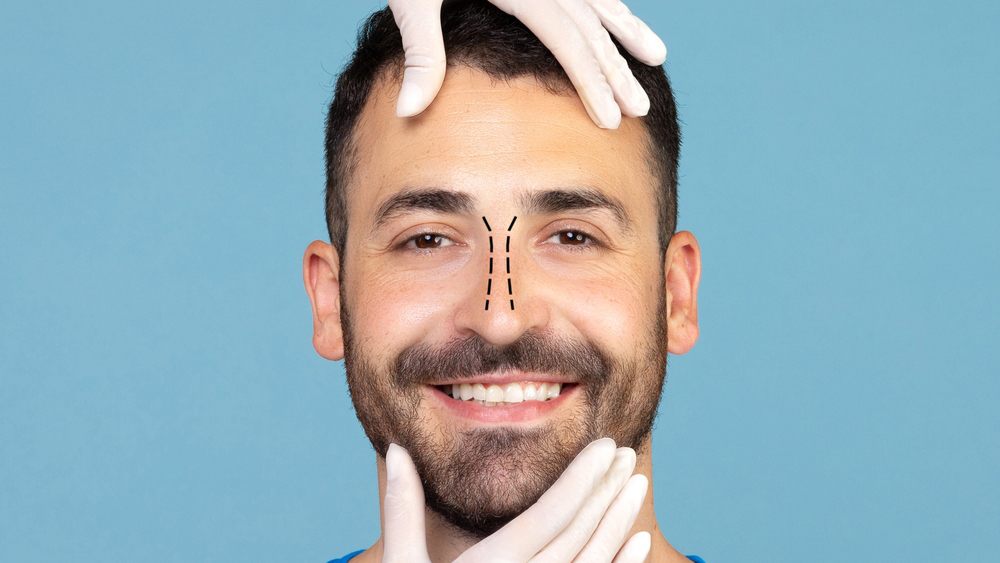
Dr. Kim conducts a detailed consultation assessing nasal structure, skin thickness, facial proportions, and the relationship between the forehead, nose, lips, and overall profile. The specific correction type or combination and the most appropriate material — implant or autologous cartilage — are determined based on individual anatomy and goals.
Step 2 — Individualized Masculine Surgical Design
Based on assessment, the nasal design is planned according to masculine proportion principles — bridge height, tip projection, nose-to-lip angle, and overall profile harmony. Refined surgical technique minimizes tissue trauma and visible scarring throughout.
Step 3 — Dedicated Anesthesia Planning
A dedicated anesthesiology specialist designs an individualized sedation anesthesia protocol based on pre-operative health assessment and procedure requirements.
Step 4 — Male Rhinoplasty Surgery (Approximately 2 Hours)
The procedure is performed according to the individualized plan — with precise surgical technique applied throughout to achieve the planned nasal correction and masculine profile design.
Step 5 — Post-Operative Monitoring and Discharge
Same-day discharge where appropriate. Nasal splints or dressings may be used temporarily. Detailed post-operative care instructions provided. Sleep with head elevated during the first week. Avoid pressure or impact on the nose during healing.
Step 6 — Recovery and Follow-Up
Initial recovery takes approximately five to seven days. Swelling and bruising are expected during the early recovery period and improve progressively. Avoid strenuous exercise until cleared. Follow-up appointments monitor structural healing, nasal contour development, and final profile outcome.
Results, Safety, and What to Expect
- Results and Longevity: Male rhinoplasty produces lasting structural changes to nasal bridge height, contour, and tip position. Because the corrections are made at the structural level — through implant placement, cartilage grafting, and precise tissue management — the improved nasal profile is designed to remain stable as healing progresses. Final nasal contour develops progressively as post-operative swelling resolves over several weeks. Individual results vary and no outcome is guaranteed.
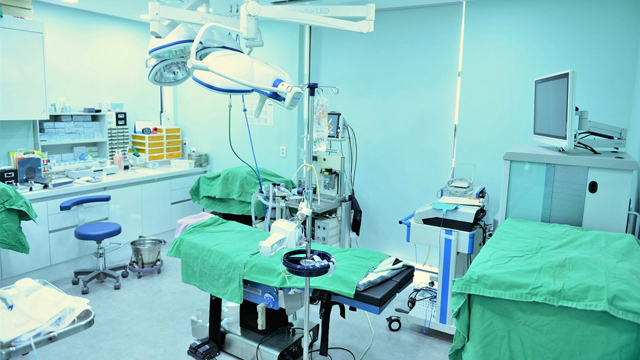
- Safety Profile: All male rhinoplasty at Deesse is performed with a dedicated sedation anesthesia specialist. Refined surgical techniques minimize tissue trauma and reduce risk of complications. Deesse's emergency-ready surgical system — central monitoring, patient monitoring device, anesthesia machine, ventilator, uninterruptible power supply, and defibrillator — is active throughout every procedure.
- Possible Side Effects and Risks: Temporary swelling, bruising, and breathing discomfort during recovery are expected. Asymmetry, implant-related concerns, scar formation, infection, and the need for revision surgery in some cases are possible. All risks and realistic expectations are discussed openly with Dr. Kim during consultation.
Why Choose Deesse for Male Rhinoplasty?
Male rhinoplasty at Deesse is distinguished by its masculine-design-first philosophy — every surgical plan is built around the specific aesthetic principles of masculine nasal harmony rather than simply applying general rhinoplasty technique to a male patient. Dr. Kim's craniofacial surgery specialization ensures the structural precision needed for both bridge augmentation and tip correction, while his masculine proportion design framework ensures the result looks naturally appropriate to each patient's individual face and character.
Deesse's five core pillars support every male rhinoplasty case:
- Patient-Centered Specialists — Every plan is built around your specific nasal anatomy, facial proportions, and masculine goals.
- Emergency-Ready Surgery System — Advanced monitoring and dedicated anesthesia specialist active throughout every procedure.
- Customized Anesthesia by Specialist — Individualized sedation protocol designed for every case.
- Total Care Recovery Program — Nasal splint management, post-operative guidance, and follow-up monitoring through full healing.
- Collaborative Field-Specific Team — Coordinated specialist team from consultation through final profile outcome.
Real Patient Experiences
Low Bridge Correction, Patient in his late 20s
This patient had a flat nasal bridge that lacked the definition he wanted for his profile — affecting his overall facial impression from the side and front. Following facial proportion assessment and bridge augmentation at Deesse, he described the result as exactly what he had been looking for — a stronger, more structured profile that looked natural to his face and significantly improved his overall masculine impression.
Hump Nose Correction, Patient in his 30s
This patient had a prominent dorsal hump that dominated his side profile and had affected his confidence for years. Dr. Kim's hump reduction design smoothed the bridge contour while preserving the masculine structural presence of the nose. He described the result as a profile he finally felt confident about — more balanced, more refined, and genuinely natural-looking.
A Stronger, More Defined Profile — Built for Your Face
If your nose lacks the bridge definition, structural presence, or profile balance that would enhance your overall masculine facial impression — male rhinoplasty at Deesse Plastic Surgery offers a precisely designed, individually planned path to a stronger, more structured, and more naturally masculine nasal profile. Dr. Jin Hyung Kim and the full Deesse specialist team will assess your facial proportions, design the nasal correction most suited to your masculine features, and deliver results that look naturally, confidently yours.
[Book Your Free Male Rhinoplasty Consultation Today]
Your consultation is free, confidential, and comes with no obligation. Our patient care team is ready to answer your questions and schedule your appointment.
Other Services
Explore additional treatments offered by our specialists.

Male Double Eyelid
Male eye surgery at Deesse Plastic Surgery is a specialized aesthetic procedure designed to improve the appearance of the eyes while preserving and enhancing masculine facial characteristics.
Learn More

Square Jaw Reduction
Achieve a refined V-line with expert square jaw reduction at Deesse Plastic Surgery. Board-certified surgeon Dr. Jin Hyung Kim. 3D precision. Minimal stepped effect. Book today.
Learn More

Breast Reconstruction
Breast reconstruction surgery is a reconstructive procedure performed to restore the shape, volume, and contour of the breast following mastectomy due to breast cancer treatment, trauma-related deformity, congenital breast absence, or post-surgical asymmetry.
Learn More