Personalized Medical Care & Dedicated International Patient Concierge


Facial Contouring · Needs Clinic Confirmation
Chin Surgery
Chin surgery — clinically referred to as genioplasty — is a surgical procedure that repositions, reduces, advances, retracts, or reshapes the chin bone to create a more balanced and proportionate lower facial contour.
Schedule a ConsultationChin Surgery

What Is Chin Surgery? Overview of Type-Specific Genioplasty at Deesse
Chin surgery — clinically referred to as genioplasty — is a surgical procedure that repositions, reduces, advances, retracts, or reshapes the chin bone to create a more balanced and proportionate lower facial contour. The chin is the defining endpoint of the facial V-line, and its shape, length, width, and projection directly influence the overall impression of the lower face — from the front, the side, and every angle in between.
At Deesse Plastic Surgery, chin surgery is approached through a type-specific framework — meaning the surgical technique is selected and customized based on the individual patient's specific chin shape, bone characteristics, and facial proportional goals. Since bone development differs for every person, a single standardized approach cannot produce the precise, natural result that each individual face requires. Dr. Kim applies the most appropriate method — Y-cut, W-cut, T-cut, advancement, retraction, reduction, or expansion — or a combination of approaches, to address each patient's specific concern comprehensively.
Before every chin surgery at Deesse, accurate 3D imaging is performed to precisely measure nerve position, bone thickness, and muscle volume. This pre-surgical mapping ensures that the osteotomy is designed to avoid nerve pathways — producing a safe procedure with minimized bleeding, side effects, and recovery time. Surgery takes within two hours under general anesthesia, with same-day discharge and three to four days of initial recovery.
At a Glance:
- Procedure: Type-specific chin osteotomy and repositioning
- Techniques: Y-cut, W-cut, T-cut, advancement, retraction, reduction, expansion
- Pre-Surgical: 3D imaging — nerve mapping, bone thickness, muscle measurement
- Duration: Within 2 hours
- Anesthesia: General anesthesia
- Discharge: Same day
- Recovery: 3–4 days
Who Is Chin Surgery Right For?
Type-specific chin surgery is appropriate for individuals whose chin shape, size, or position affects the overall lower facial balance and impression. Candidacy is confirmed through detailed consultation, facial proportion analysis, and 3D imaging with Dr. Kim.
Ideal Candidates Include:
- Protruding Chin from the Front — Individuals in their 20s–40s whose chin protrudes excessively when viewed from the front, creating a heavy or disproportionate lower facial impression.
- Long or Wide Chin — Those whose chin is disproportionately long or wide relative to their other facial features, making the lower face appear large and preventing a natural V-line.
- Thick or Heavy Lower Jaw — Patients whose lower jaw appears thick or blocky, giving the face a square, heavy lower contour rather than a refined and tapered one.
- Recessed or Undefined Chin — Those whose chin lacks projection or definition — creating a soft, undefined lower facial profile line that affects the balance between the nose, lips, and chin.
- Chin Coming Too Far Forward — Individuals whose chin protrudes significantly in profile, disrupting the natural proportion of the lower facial contour.
- Asymmetrical Chin — Patients whose chin sits off-center or presents visible left-right asymmetry, affecting overall facial symmetry.
- Plain or Indistinctive Facial Impression — Those who feel their chin shape contributes to a flat, undistinctive lower face and want a more refined, three-dimensional result.
Meet the Specialist: Dr. Jin Hyung Kim — Chin Surgery & Craniofacial Expert

Chief Director | Board-Certified Plastic Surgeon | Deesse Plastic Surgery
Dr. Jin Hyung Kim is the Chief Director of Deesse Plastic Surgery and a board-certified plastic surgeon with specialized expertise in aesthetic facial contouring and craniofacial procedures. Trained at Yonsei University College of Medicine and Severance Hospital, Dr. Kim brings the bone-level surgical precision and facial structural understanding that type-specific chin surgery demands.
Genioplasty requires more than technical osteotomy skill. It demands a three-dimensional understanding of the chin's relationship to the entire lower face — how the repositioned bone will interact with the overlying soft tissue, how the new chin position will look from multiple angles, and how the corrected chin integrates with the nose, lips, and jaw line in motion and at rest. Because bone development is unique to each individual, the surgical technique — and the precise direction, extent, and method of bone movement — must be designed individually, not applied from a standard template.
Dr. Kim's craniofacial surgery specialization provides the anatomical depth and three-dimensional perspective that this level of personalized chin planning requires. His 3D pre-surgical imaging approach maps nerve positions and bone characteristics before any incision is made — ensuring the procedure is safe, targeted, and designed to avoid nerve damage. His continuous research into facial contouring osteotomy methods — including the full range of Y, W, and T-cut approaches — reflects his commitment to delivering the most appropriate and effective surgical solution for each individual chin type.
Credentials:
- M.D. & Master's Degree — Yonsei University College of Medicine
- Board-Certified Plastic & Reconstructive Surgeon
- Specialist Training — Severance Hospital, Sinchon
- Former Full-Time & Adjunct Professor, Dept. of Plastic Surgery — Severance Hospital
- Former Chief Director — Dau Plastic Surgery
- Current Chief Director — Deesse Plastic Surgery
Professional Memberships: Korean Society of Plastic and Reconstructive Surgeons | Korean Society for Aesthetic Plastic Surgery | Korean Society of Craniofacial Surgery | Japan Society of Aesthetic Plastic Surgery | Oriental Society of Aesthetic Plastic Surgery | International Society of Plastic Surgery
Chin Surgery Types: Procedures and Expected Improvements
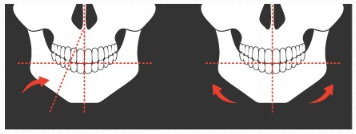
- Y-Cut / W-Cut Osteotomy: These established osteotomy techniques allow for a wide range of corrections — chin reduction, shortening, lengthening, advancement, and retraction are all freely adjustable within the same approach. A key advantage of the Y and W-cut methods is the absence of secondary stepped appearance at the osteotomy site — producing a cleaner, more natural lower facial contour. Complete osteotomy including soft bone is possible, allowing the chin line to be made thinner and more refined from all angles.
- T-Cut Osteotomy: The T-cut method is particularly effective for U-shaped faces where a V-line improvement is the primary goal. By maximally narrowing the chin toward the front center, the T-cut creates a slim, three-dimensional V-line that significantly improves overall lower facial impression. This technique is well-suited for patients whose chin is wide from the front and who want a pronounced narrowing effect.
- Chin Advancement and Retraction: For patients with a recessed chin, advancement surgery pulls the chin forward to create a more defined lower facial profile — improving the proportion between the nose, lips, and chin without creating an operated appearance. For patients with a protruding chin, retraction surgery repositions the chin backward, restoring a balanced profile line. Both approaches allow for fine adjustment of chin depth simultaneously, and the bone design prevents lateral protrusion for a clean, natural result.
- Chin Reduction and Expansion: Reduction surgery addresses chins that are disproportionately wide, long, or prominent — repositioning the bone rather than simply shaving it, to produce a result that is difficult to distinguish from natural anatomy. Expansion surgery corrects chins that are too narrow or undefined. Both can be combined with advancement or retraction in the same procedure for a comprehensive lower facial contouring result.
- Asymmetry Correction: For patients with congenital or injury-related chin asymmetry, Dr. Kim applies individualized correction approaches — addressing the specific nature and degree of asymmetry through Y-shaped chin movement that corrects the full facial balance rather than treating the chin in isolation. Fine balance adjustment beyond simple symmetry correction is also possible.
Expected Improvements May Include:
- More refined, tapered lower facial V-line
- Improved chin projection or reduction as required
- Corrected chin asymmetry and center alignment
- Reduced lower jaw thickness and improved contour from front and side
- More defined facial impression — less plain, more three-dimensional
- Natural-looking result that is difficult to distinguish from natural bone structure
- Minimized bleeding and side effects through minimum osteotomy approach
Results vary by individual. Bone healing, final chin position, and contour depend on anatomy, technique used, and post-operative care. No specific outcome is guaranteed.
Chin Surgery Process and Timeline at Deesse Plastic Surgery
Step 1 — Consultation and 3D Pre-Surgical Imaging
Dr. Kim conducts a detailed consultation assessing chin shape, facial proportions, and aesthetic goals. Accurate 3D imaging is performed to precisely measure nerve position, bone thickness, and muscle volume — forming the foundation of the individualized surgical plan.
Step 2 — Type-Specific Surgical Plan
Based on 3D analysis and the patient's goals, the most appropriate chin surgery technique is selected and customized. Chin advancement, retraction, reduction, expansion, or combination approaches are planned specifically for the individual's chin type and facial shape.
Step 3 — General Anesthesia Planning
A dedicated anesthesiology specialist designs an individualized general anesthesia protocol based on the patient's pre-operative health assessment and procedure requirements.
Step 4 — Surgery (Within 2 Hours)
The procedure is performed according to the individualized type-specific plan — with minimum osteotomy technique to minimize bleeding and side effects. Nerve pathways mapped in pre-surgical imaging are carefully avoided throughout.
Step 5 — Post-Operative Monitoring and Discharge
Patients are monitored using Deesse's advanced systems before same-day discharge. Soft liquid diet — porridge, soup — for five to seven days. Antibiotics taken for one week. Cold compress for the first three days; warm compress from day four. Keep bandage for two days; compression garment worn for one month thereafter.
Step 6 — Recovery and Follow-Up
Initial recovery is three to four days. Intraoral sutures dissolve over approximately one month; suture removal possible from the second week. Avoid saunas and full bathing for three to four weeks. Numbness in some areas may occur and typically improves over one to six months. Dark-colored nasal mucus is possible for approximately one week — contact the hospital immediately if reddish color persists beyond two to three days.
Results, Safety, and What to Expect
- Results and Longevity: Type-specific chin surgery produces lasting structural changes to the chin through bone repositioning and osteotomy. Because the procedure addresses the underlying bone structure rather than surface tissue alone, results are designed to remain stable as healing progresses. Final contour becomes fully visible as post-surgical swelling resolves over weeks to months. Individual results vary and no outcome is guaranteed.
- Safety Profile: All chin surgery at Deesse is preceded by 3D nerve mapping — ensuring the osteotomy avoids nerve pathways and eliminating the nerve damage risk present in less precisely planned approaches. General anesthesia is managed by a dedicated specialist. Deesse's emergency-ready surgical system — ECG monitoring, uninterruptible power supply, cardiac defibrillator, and central patient monitoring — is active throughout every procedure.
- Possible Side Effects and Risks: Potential side effects include temporary swelling, bruising, dietary restriction, and numbness during healing. Numbness typically resolves within one to six months. Infection, fixation instability, asymmetry, and anesthesia complications are possible. All risks are discussed openly with Dr. Kim during consultation.
Why Choose Deesse for Chin Surgery?

Chin surgery that produces a natural, proportionate result requires a surgeon who approaches every case as a unique anatomical challenge — not a standardized procedure. At Deesse, Dr. Kim's type-specific approach means every patient receives the surgical technique most appropriate for their individual chin shape — not the one most commonly performed. His 3D pre-surgical imaging, combined with his craniofacial surgery expertise, ensures that the surgical plan is designed with complete bone-level precision before any incision is made.
Deesse's five core pillars support every chin surgery case:
- Patient-Centered Specialists — Every plan is built around your specific chin type, bone anatomy, and personal goals.
- Emergency-Ready Surgery System — Advanced monitoring and safety equipment active throughout every general anesthesia procedure.
- Customized Anesthesia by Specialist — Individualized general anesthesia protocol designed by a dedicated expert.
- Total Care Recovery Program — Systematic bruising, swelling, and pain management through the full recovery period.
- Collaborative Field-Specific Team — Coordinated specialist team from initial 3D imaging through final follow-up.
Real Patient Experiences
Chin Reduction, Patient in her late 20s
This patient felt her chin was disproportionately wide and long, preventing the V-line she wanted. Following 3D nerve mapping and type-specific reduction surgery at Deesse, she described the improvement as more natural-looking than she had expected — her lower face looked refined and proportionate, and nobody could tell she had undergone surgery.
Chin Advancement, Patient in his 30s
This patient sought correction for a recessed chin that gave his profile a soft, undefined lower facial line. Dr. Kim's 3D analysis guided a customized advancement plan. He described the result as a significant profile improvement — his chin looked naturally projected and his overall face more balanced.
Define Your Chin. Refine Your Entire Face.
If your chin shape, size, or position is affecting your lower facial balance and confidence, type-specific chin surgery at Deesse Plastic Surgery offers a precise, individually designed path to a more refined and naturally proportionate result. Dr. Jin Hyung Kim and the Deesse specialist team will map your bone anatomy, select the most appropriate technique for your chin type, and deliver a result that creates the V-line your face was always meant to have.
[Book Your Free Chin Surgery Consultation Today]
Your consultation is free, confidential, and comes with no obligation. Our patient care team is ready to answer your questions and schedule your appointment.
Other Services
Explore additional treatments offered by our specialists.

Male Double Eyelid
Male eye surgery at Deesse Plastic Surgery is a specialized aesthetic procedure designed to improve the appearance of the eyes while preserving and enhancing masculine facial characteristics.
Learn More

Square Jaw Reduction
Achieve a refined V-line with expert square jaw reduction at Deesse Plastic Surgery. Board-certified surgeon Dr. Jin Hyung Kim. 3D precision. Minimal stepped effect. Book today.
Learn More

Breast Reconstruction
Breast reconstruction surgery is a reconstructive procedure performed to restore the shape, volume, and contour of the breast following mastectomy due to breast cancer treatment, trauma-related deformity, congenital breast absence, or post-surgical asymmetry.
Learn More